There is no single answer
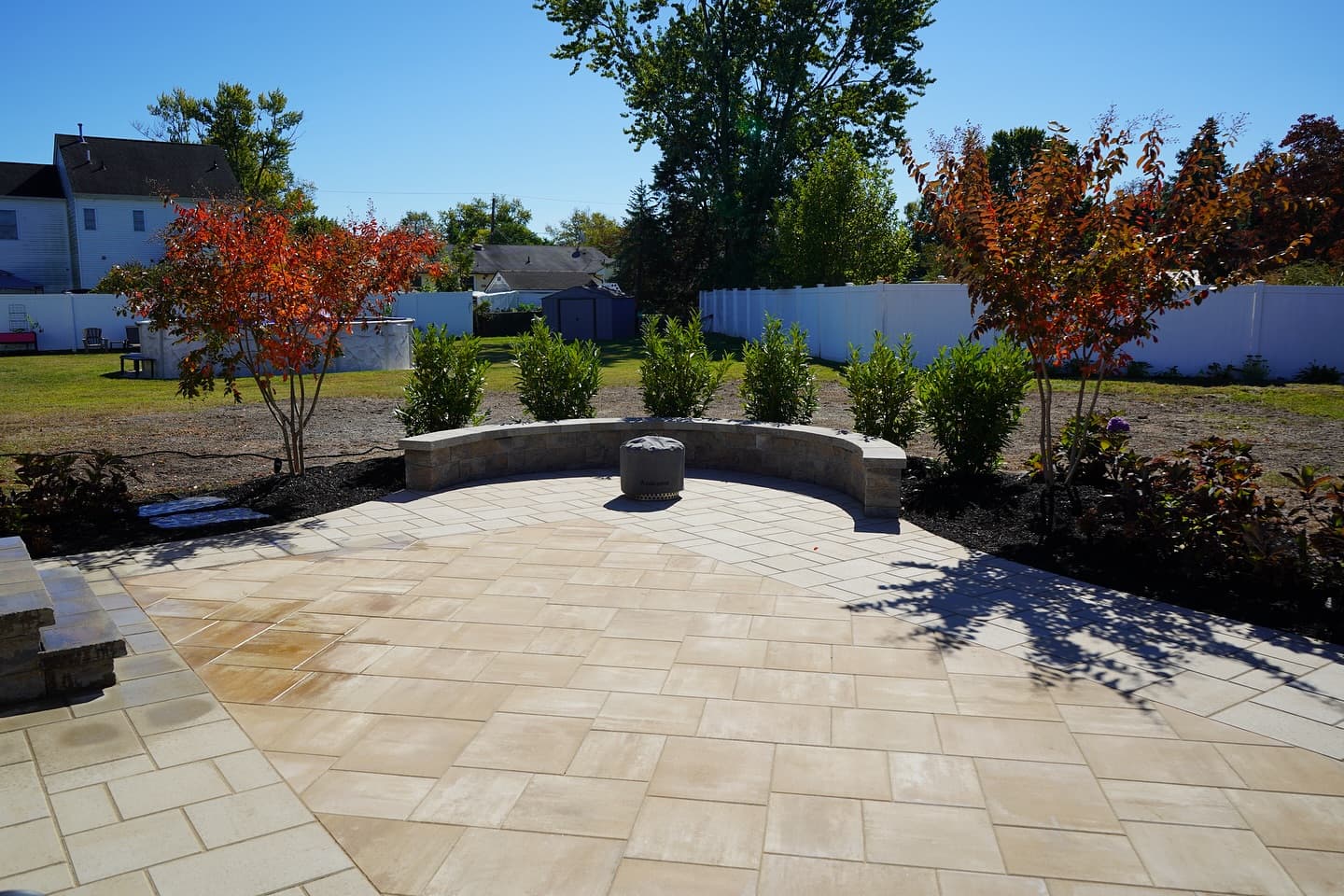
The honest answer is that paver patio costs in New Jersey vary significantly based on the property, the scope, and the materials. A simple 200 square foot patio on flat ground with standard concrete pavers is a very different project than a 600 square foot multi level patio with a fire pit, seat walls, steps, and landscape lighting.
Most homeowners searching for pricing are trying to figure out if a project is within reach before they call. This article covers the main factors that drive the number so you can have a better sense of what to expect.
What affects the price
Size. The total square footage is the biggest factor. More surface area means more materials, more base prep, and more labor. But the cost per square foot often goes down on larger patios because the fixed costs (mobilization, equipment, edge work) get spread across more area.
Materials. Standard concrete pavers from manufacturers like Belgard, Unilock, or Cambridge are the most common and most affordable option. Techo-Bloc pavers tend to run higher. Natural stone and porcelain pavers are premium options. The paver itself is only part of the material cost though. Border pavers, polymeric sand, edge restraint, and base materials all add up.
Base preparation. Every patio needs a properly excavated and compacted base. In Central New Jersey, the clay soils common across Somerset and Hunterdon counties require deeper excavation, typically 8 to 12 inches, to create a stable foundation. If the existing grade slopes toward the house, regrading adds to the scope.
Access. If the backyard is accessible by machine (loader, mini excavator), the work goes faster and costs less. If materials need to be wheeled in by hand through a narrow side yard, labor costs go up.
Features. Fire pits, seat walls, steps, retaining walls, outdoor kitchen areas, and landscape lighting all add to the project. Each one requires its own base, materials, and labor. A patio with a built in fire pit and seat wall can cost significantly more than the same patio without them.
Drainage. If the patio area has drainage issues, those need to be solved during construction. French drains, catch basins, or regrading add cost but prevent bigger problems down the road.
What to ask when getting estimates
When comparing quotes from different contractors, make sure the estimates cover the same scope. Key things to look for:
- Is the base excavation depth specified?
- Is edge restraint included on all open sides?
- What type of polymeric sand is being used?
- Is drainage being addressed or ignored?
- Does the price include cleanup and restoration of the surrounding lawn?
- Are permits included if needed?
The cheapest quote is not always the best value. A patio built on a shallow base with no edge restraint will shift, settle, and pool water within a few years. The cost to tear it out and rebuild it right is more than the difference between a cheap install and a proper one.
Get a quote for your property
Every property is different. The best way to get an accurate number is to have someone walk the site, evaluate the grade and soil, discuss materials, and scope the project based on what the space actually needs. Sultan Services provides free estimates for patio projects across Hillsborough and Central New Jersey.