Mulching & Bed Refresh
Property Care

Mulching & Bed Refresh

Mulch installation, bed edging, weed removal, and planting bed cleanup for residential and commercial properties in Hillsborough and across Central New Jersey.

Mulch installation and bed refresh

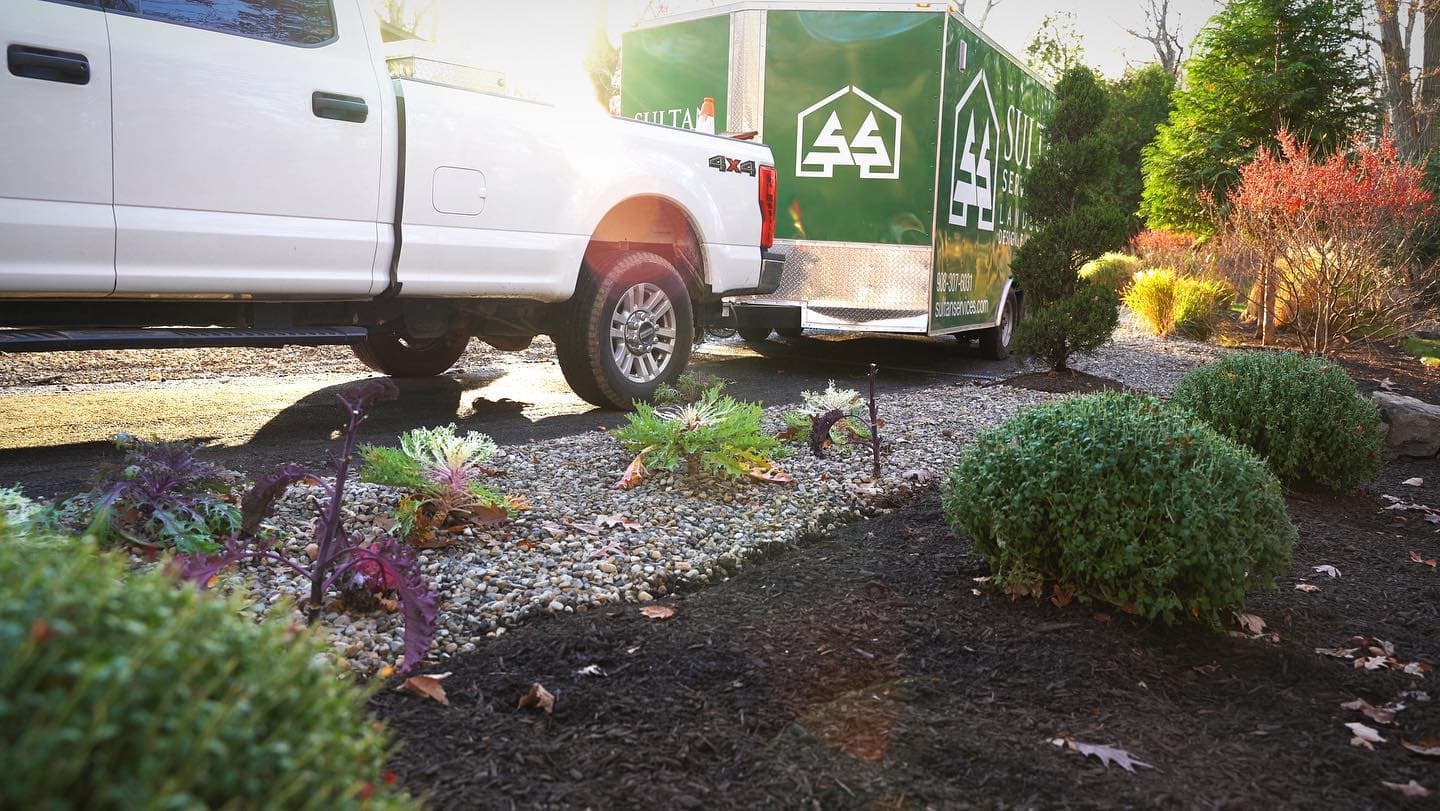
Sultan Services handles mulch installation and bed refresh work for residential and commercial properties in Hillsborough, NJ and throughout Central New Jersey. That includes bed edging, weed removal, old mulch preparation, bed reshaping, fresh mulch spread at the right depth, and cleanup around trees and shrubs. Mulching is available as a standalone service or as part of a spring cleanup, seasonal maintenance visit, or larger landscape project.

What goes into a mulch and bed refresh job

A proper mulch job is more than dumping material on the beds. The process starts with cutting clean edges along all bed borders where the turf and bed meet. Existing weeds are pulled or treated. Old decomposed mulch is raked and turned so the new layer bonds properly instead of sitting on top of a compressed surface. Bed borders that have eroded or been overgrown by grass are reshaped and redefined.

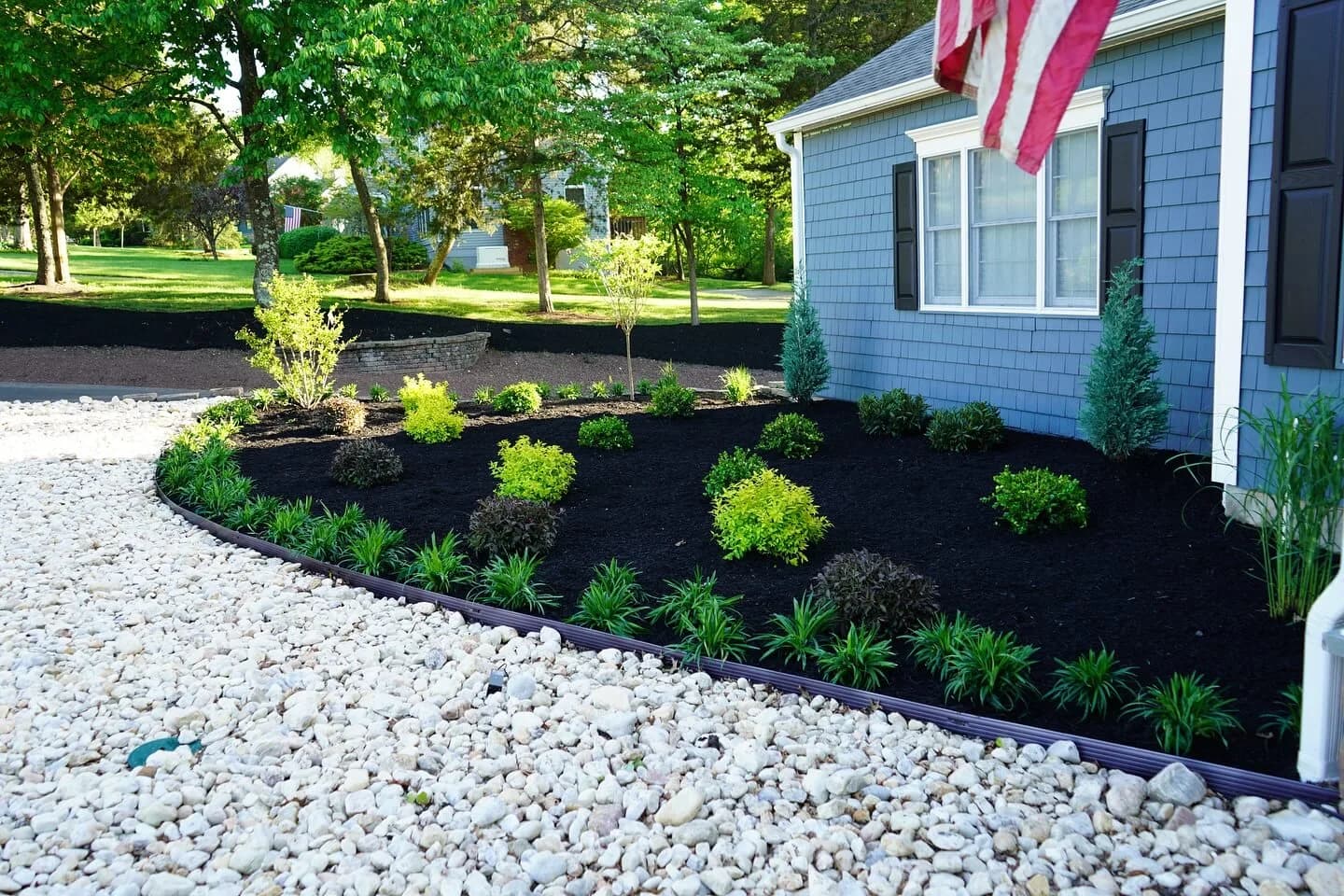
Fresh mulch is then spread to 2 to 3 inches across all beds. Around trees, mulch is kept several inches away from the trunk to prevent rot and disease. Around shrubs and perennials, material is pulled back from the plant crowns. The result is beds that look clean, defined, and properly maintained.

  • Bed edge cutting and definition
  • Weed removal and bed cleanup
  • Old mulch raking and preparation
  • Fresh mulch installation at proper depth
  • Bed reshaping where borders have eroded
  • Mulch pulled back from tree trunks and plant crowns
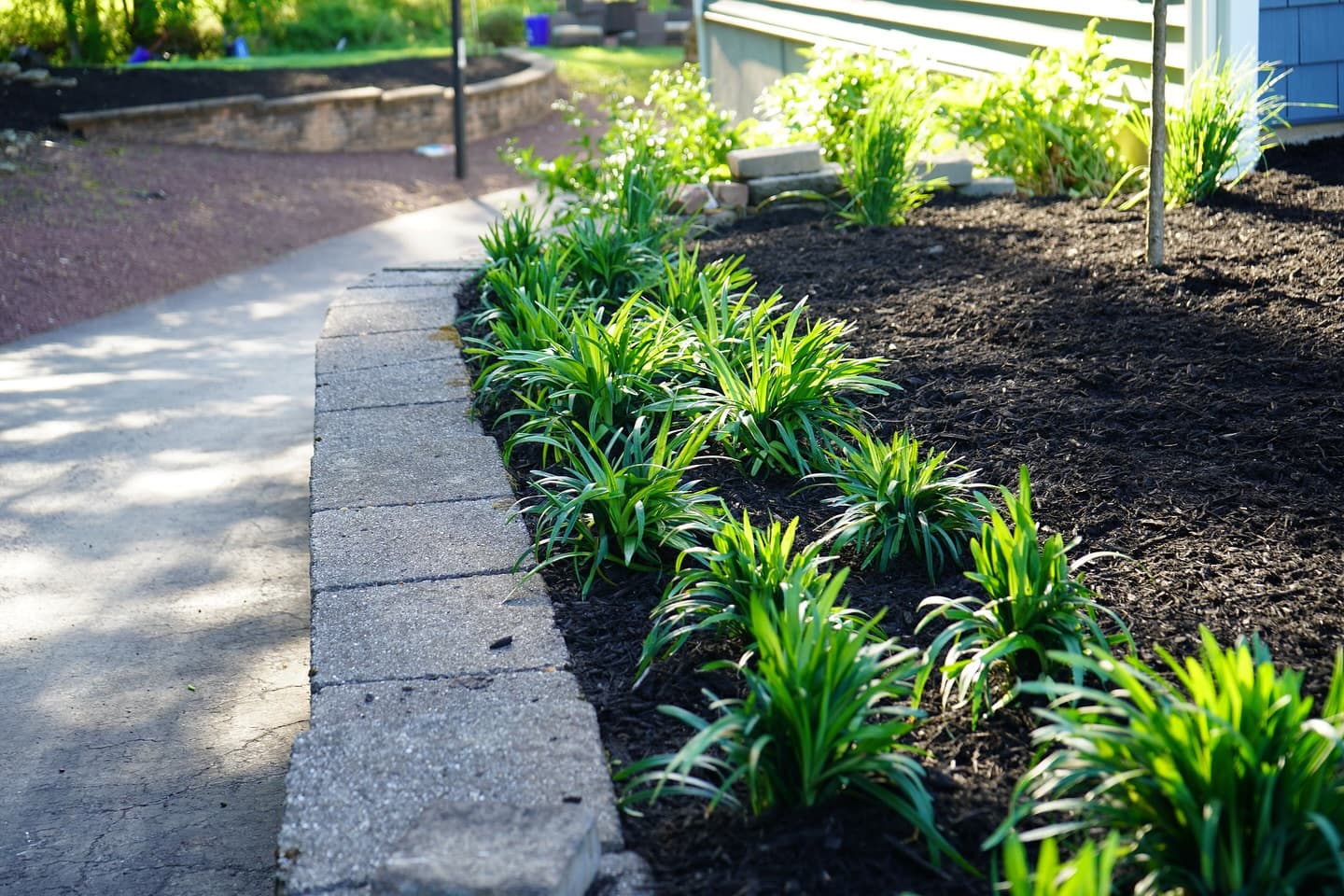
Fresh mulch and clean bed edges along a front walkway

What mulch does beyond looks

Fresh mulch makes beds look better immediately, but it also does real work for the landscape. Mulch retains soil moisture by slowing evaporation, which means less watering during summer. It suppresses weeds by blocking light from reaching weed seeds in the soil. It insulates plant roots from temperature swings, which matters in Central New Jersey where freeze and thaw cycles are common through winter and early spring.

Over time, organic mulch breaks down and adds nutrients back into the soil. It also prevents erosion during heavy rain by absorbing impact instead of letting water wash the topsoil out of the beds.

Fresh dark mulch in planting bed along paver walkway
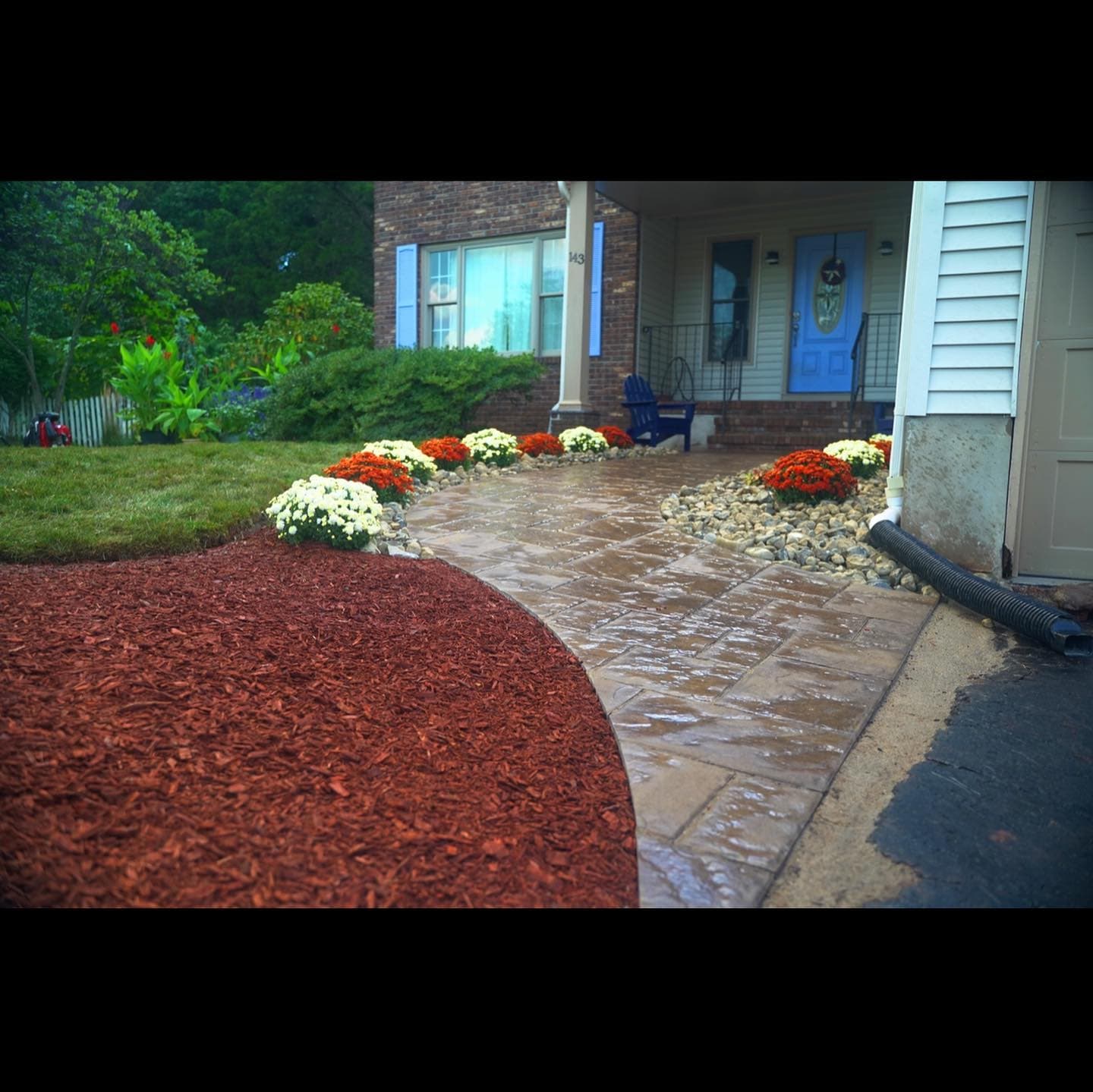
Red dyed mulch with seasonal mums along front walkway

Common mulch types

Hardwood mulch is a popular natural option that breaks down at a moderate rate and stays in place well. Cedar mulch is another choice that resists decay and has a distinct smell some homeowners prefer.

Dyed mulch (black, brown, or red) is popular for properties where the homeowner wants a specific color that holds longer. The dyes used in commercial landscape mulch are generally considered safe for plants and soil. The right choice depends on the look, the budget, and how the beds relate to the rest of the property.

When to mulch in New Jersey

The most common time to mulch in Central New Jersey is mid April through May, after the last hard frost. This is when most homeowners want the beds cleaned up and looking fresh for the season. A second application or top dress in fall can also make sense, especially ahead of winter, to protect roots and keep beds looking maintained heading into the colder months.

Mulching also makes sense ahead of listing photos, open houses, or events when the property needs to look its best quickly. It is one of the fastest and most visible curb appeal improvements available.

What mulching and bed refresh includes

  • Fresh mulch installation
  • Bed edge cutting and definition
  • Weed removal and treatment
  • Old mulch raking and preparation
  • Bed reshaping and border repair
  • Tree ring cleanup and proper spacing
  • Double shredded hardwood mulch
  • Dyed mulch (black, brown, red)
  • Cedar mulch
  • Standalone or paired with cleanup and maintenance